
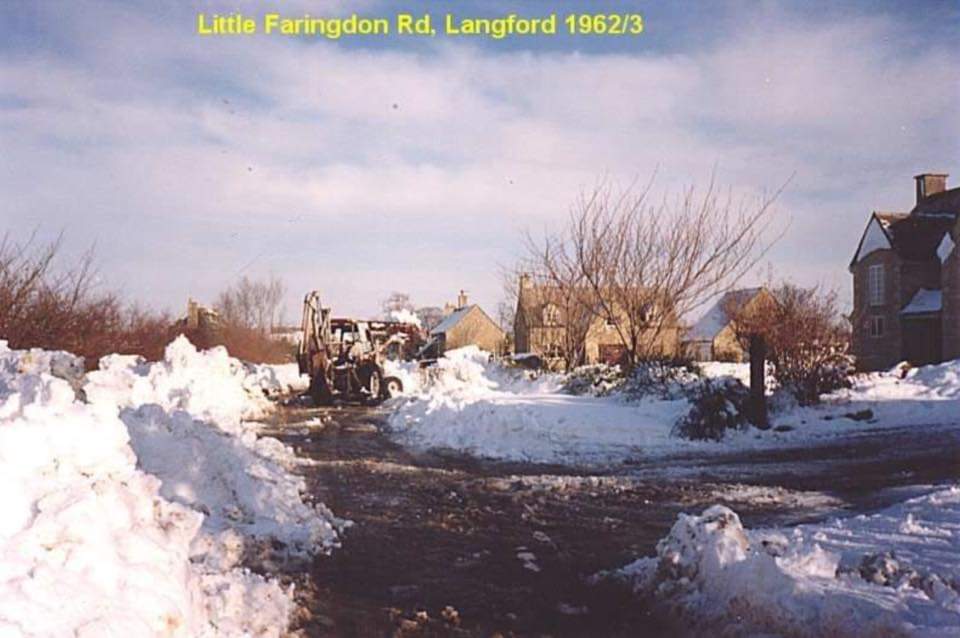
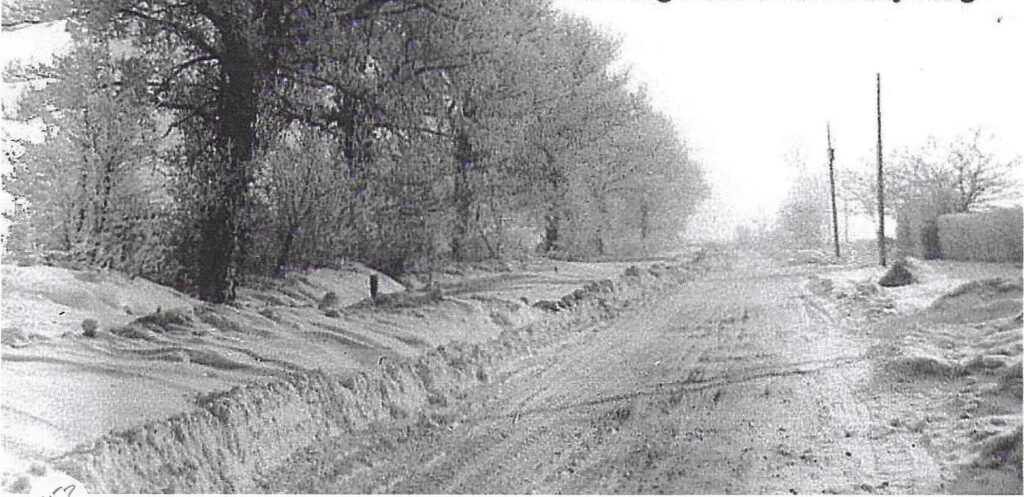
What does this winter have in store? The two coldest winters in the last 100 years were in 1947 and 1962/63. There are a few who still remember 1947, soon after the ending of the war, when things were made harsher by the shortages of coal and continued food rationing. More of us remember 1962/63. Here is a bit about the winter of 1962/63 along with some photos of Langford at the time.
The winter of 1963 – the coldest for more than 200 years
With temperatures so cold the sea froze in places, 1963 is one of the coldest winters on record. Bringing blizzards, snow drifts, blocks of ice, and temperatures lower than -20 °C, it was colder than the winter of 1947, and the coldest since 1740.
It began abruptly just before Christmas in 1962. The weeks before had been changeable and stormy, but then on 22 December a high pressure system moved to the north-east of the British Isles, dragging bitterly cold winds across the country. This situation was to last much of the winter.
A belt of rain over northern Scotland on 24 December turned to snow as it moved south, giving Glasgow its first white Christmas since 1938. The snow-belt reached southern England on Boxing Day and parked over the country, bringing a snowfall of up to 30 cm.
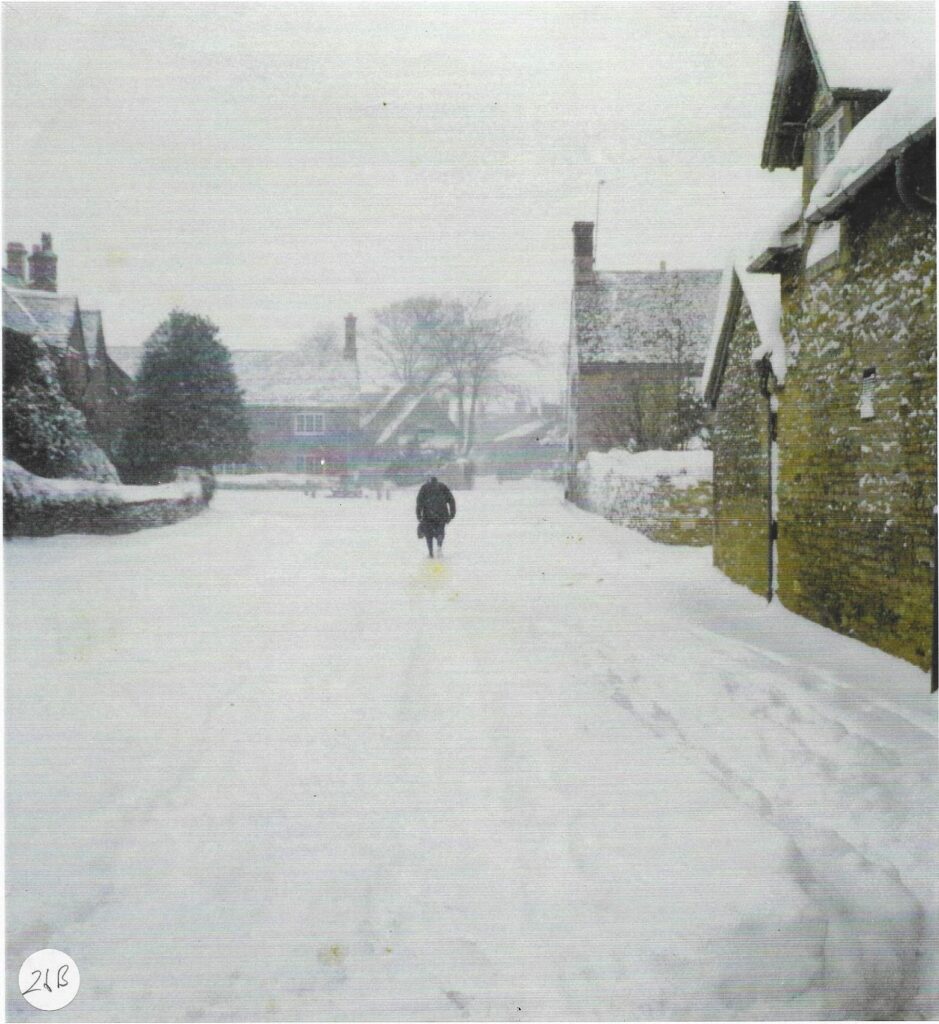
A blizzard followed on 29 and 30 December across Wales and south-west England, causing snowdrifts up to 6 m deep. Roads and railways were blocked, telephone lines brought down, and some villages were left cut off for several days. The snow was so deep farmers couldn’t get to their livestock, and many animals starved to death.
This snow set the scene for the next two months, as much of England remained covered every day until early March 1963. While snow fell, and settled there was still plenty of sunshine. The weak winter sun did not warm things up, however, as the lack of cloud cover allowed temperatures to plunge. In Braemar in Scotland, the temperature got down to -22.2 °C on 18 January. Mean maximum temperatures in January were below 0 °C in several places in southern England and Wales, more than 5 °C below average. Mean minimum temperatures were well below freezing. Temperatures weren’t much higher for most of February.
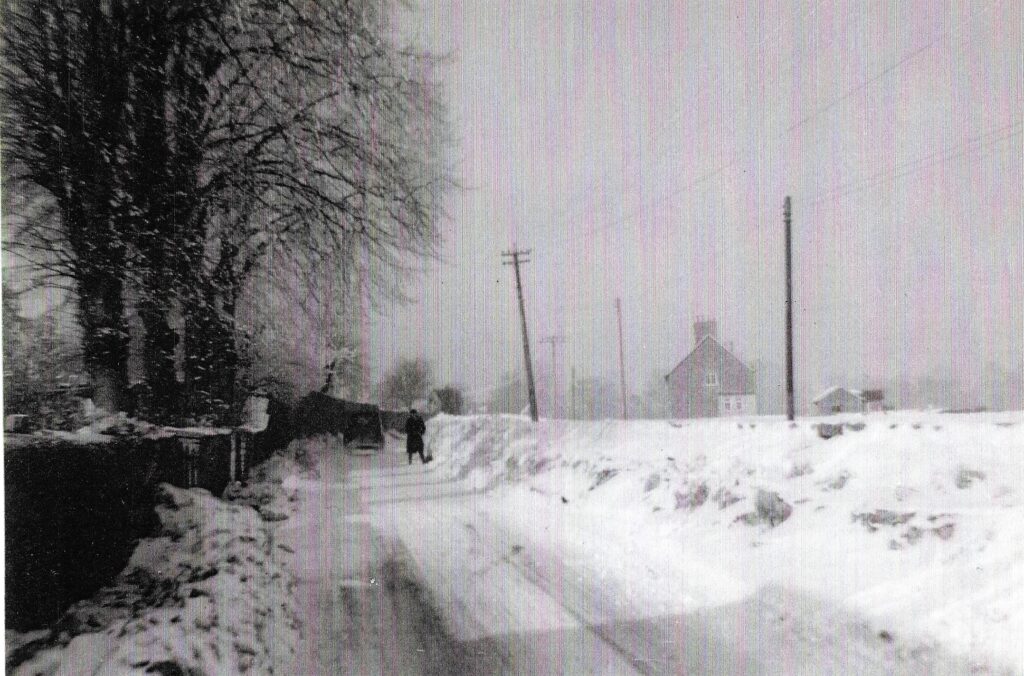
The long bitterly cold spell caused lakes and rivers to freeze, even sea water in some of England’s harbours turned to ice. The Thames above Oxford froze hard enough for people to walk across the river. Ice patches formed at sea and on beaches. Winter didn’t fully relax its grip until 4 March, when a mild south-westerly flow of air reached the British Isles. By 6 March, there was no frost anywhere in the British Isles and the temperature in London reached 17 °C – the highest since October 1962.
Finally, the coldest winter for more than 200 years in England and Wales had ended. With the thaw came flooding, but nothing like the scale of the 1947 floods. Soon after the winter had ended, life returned to normal.
One thought on “WINTER IS COMING”
The Elms photo is from the early 80’s, not 62/63 as Meysey’s barn was still a barn in the 60’s.