
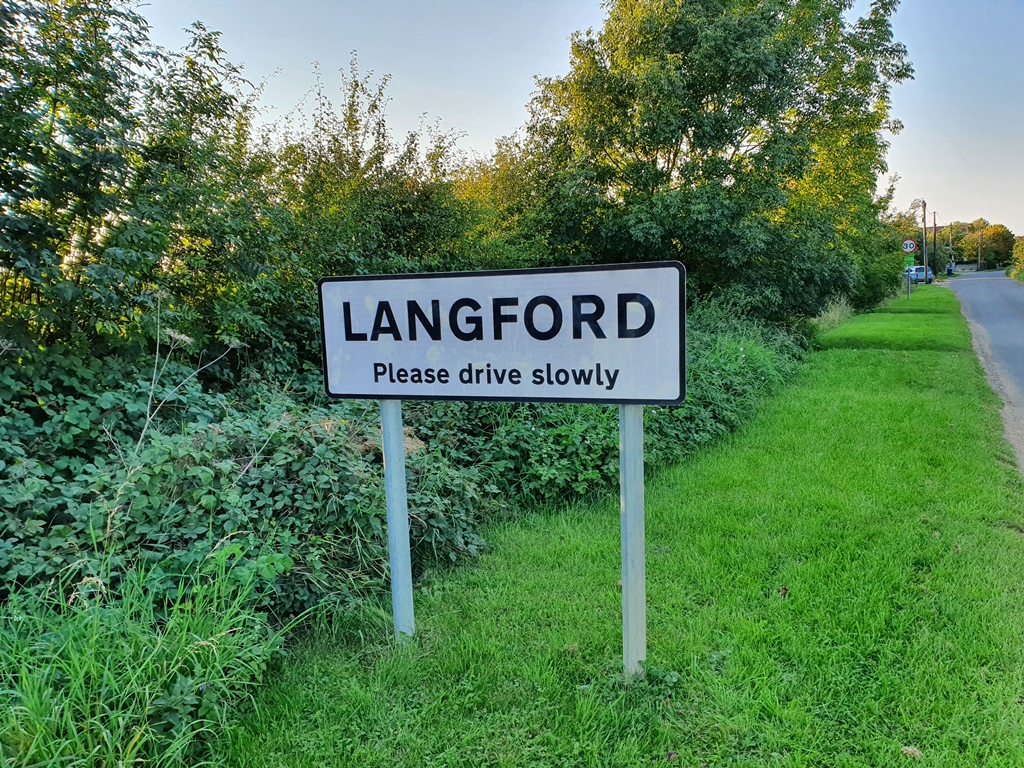
We have previously shared news on the proposed West Oxfordshire Energy Park development by Low Carbon. Some villages have received more information than others to date, so following a meeting between representatives of a number of potentially affected Parish Councils, here is a common update for all villages on what we know so far, what we are doing collectively and, importantly, to get your views and offers of expertise.
There is some urgency, as Low Carbon has indicated intention to begin its public information from 21 September.
We want our communities to be ready to engage with that information as it emerges, rather than beginning to organise afterwards. No outcome is being assumed at this stage, with our role to establish facts, scrutinise proposals and hear from the people we represent – whether you support aspects of the proposals, seek significant change or mitigation, through to opposing the project entirely.
What is being proposed?
Low Carbon, a UK-based renewable energy company, is developing proposals for West Oxfordshire Energy Park, a large-scale solar and energy storage project. The project will be a Nationally Significant Infrastructure Project (NSIP). It will follow the national Development Consent Order (DCO) process rather than being determined as an ordinary local planning application.
This is much more than simply fields of solar panels. Low Carbon has specifically described the proposal as involving solar generation and battery energy storage, and a project of this nature would also require associated infrastructure – substations, switching equipment, cabling, grid infrastructure etc.
How large could it be?
Our investigations of publicly available Land Registry information indicate that approximately 960 hectares – around 2,370 acres – of land may currently be subject to option arrangements. Low Carbon has not yet published its proposed development boundary. Our current understanding is that the wider area under consideration extends around Langford to the A361 and Little Faringdon in the west, down to Langley Lane near Kelmscott to the south, towards Little Clanfield in the east and Filkins/Broughton Poggs to the north approximately.
This is a substantial area of countryside encompassing many villages and rural communities.
What will we be looking at?
A project of this potential scale could have long-term implications for this part of West Oxfordshire.
Among the matters that will need careful examination are agricultural land and farming, food production and food security, human health, heritage and Conservation Areas, landscape and views, wildlife and biodiversity, roads and construction traffic, noise, energy storage and associated infrastructure, neighbouring properties and the wider character of our villages and countryside. There may be benefits from renewable energy generation and potentially community benefits proposed by the developer. Those need to be properly understood too.
At this stage, it is important that we examine both the claimed benefits and the potential impacts.
Why here?
We believe this is one of the fundamental questions that needs to be answered. There may be publicly identifiable reasons why this part of West Oxfordshire could be attractive for an energy project, but that is different from understanding Low Carbon’s actual site-selection process and rationale. We want to understand why this particular area was selected, what criteria were used, what alternatives were considered and why predominantly agricultural land was chosen rather than other potential alternatives.
This matters because understanding the justification for locating a project of this scale here is fundamental to assessing the proposal itself.
Working together
Representatives of Langford, Broadwell & Kencot, Grafton, Filkins & Broughton Poggs, Alvescot, Kelmscott, Little Faringdon and Clanfield have now met to share information and discuss how our communities can work together, with beginnings of a cross-parish working group.
A project of this potential scale does not stop at parish boundaries. Working together allows us to pool information and expertise, coordinate questions, avoid unnecessary duplication, scrutinise the proposals effectively and give our communities a stronger and better-informed voice. We will also work with West Oxfordshire District Council, Oxfordshire County Council, Charlie Maynard MP and other relevant bodies, drawing on technical expertise and resources available to them, while ensuring that the views of our individual communities are properly represented.
What happens from 21 September?
Low Carbon intends to begin its public information and engagement activity from 21 September. We recognise that the information will naturally be framed around Low Carbon’s own project agenda.
ACTION FOR ALL: We need your views and your expertise
Prior to 21 September we are therefore asking residents to contact your Parish Council now – to understand resident priorities, put key questions on the record before public launch and be ready to scrutinise the proposals and seek specialist advice where needed. Our aim is to be proactive, not reactive.
If our communities are to have a meaningful voice in a major infrastructure project which could affect this area for decades, we need to establish the facts, test the case being made, ask the right questions and understand what matters to residents as early as possible to shape the agenda rather than respond to it.
We particularly want to know:
- What concerns you? What, if anything, do you support?
- What questions should we be asking Low Carbon prior to 21 September?
- What potential effects should receive the greatest scrutiny?
- Are there particular places, views, routes, habitats, heritage assets or other local features that you believe we particularly need to understand or protect?
- Do you believe the project should be resisted, significantly changed, mitigated or supported, and why?
- What should your Parish Council prioritise as it develops our response?
We would also particularly like to hear from residents who have relevant professional expertise, experience, or contacts which could help our communities – experience in planning, NSIPs, planning or environmental law, landscape, ecology, agriculture, energy infrastructure, engineering, highways, communications, government or public affairs, or previous experience of major infrastructure proposals.
There may be considerable knowledge and expertise within our communities that the Parish Councils simply don’t yet know about, and we would like to understand what resources may be available to us.
Community meetings & keeping everyone informed
We propose holding dedicated community meetings, giving you an opportunity to see and discuss the emerging proposals, ask questions and share views face-to-face. One clear outcome from our first cross-parish meeting was the importance of ensuring that residents across our different communities have access to the same core information wherever possible. Our aim is to communicate accurately, openly and consistently, and to distinguish clearly between what we know, what we believe and what we are still trying to establish.
Please send your views to energy@langfordparishcouncil.com, tell us if you have expertise or experience which could help, and let us know whether you would be interested in attending a dedicated community meeting as soon as possible.
Please also share this update with neighbours who may not currently receive Parish Council communications.